
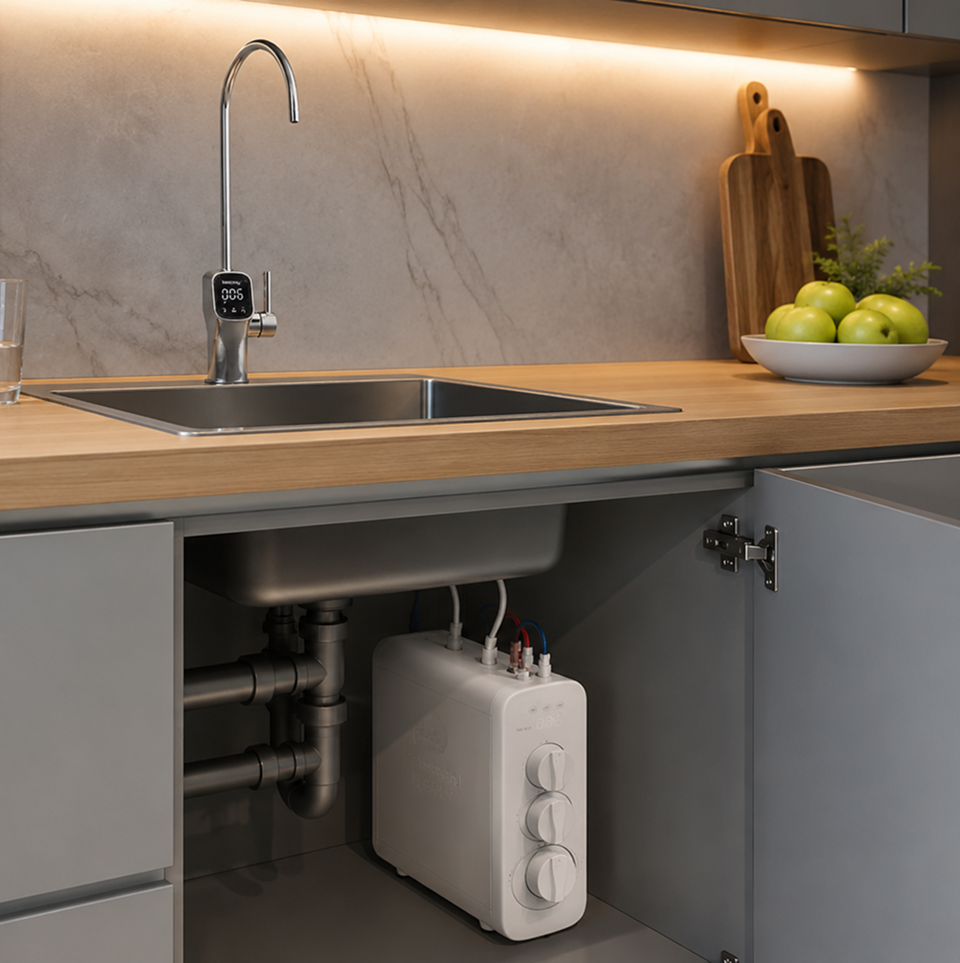
For many Iowa homeowners, bottled water has become the default backup plan. When people start hearing more about nitrates, agricultural runoff, and drinking water concerns, it feels easy to grab a case of bottled water from the store and move on.
But bottled water is usually a short-term fix, not a long-term household drinking water strategy.
For families who want cleaner, better-tasting water at home, an under-sink reverse osmosis system can be a more convenient, consistent, and practical solution.
Why Iowa Homeowners Are Thinking Differently About Drinking Water
Iowa’s water quality concerns are not just about taste. Nitrates are one of the biggest issues discussed across the state, especially in communities impacted by agricultural runoff and river source water challenges.
The federal drinking water limit for nitrate is 10 mg/L as nitrogen, and Iowa State University Extension states that water with nitrate concentrations of 10 mg/L or higher should not be consumed by infants under six months of age or pregnant women.
That concern is one reason many households turn to bottled water. It feels safe, familiar, and easy. But when bottled water becomes part of your daily routine, the cost, storage, hauling, and waste can add up quickly.
Bottled Water Is Convenient, But It Has Limits
Bottled water can be useful in certain situations. It is portable, easy to store, and helpful during emergencies or boil advisories. It can also give families peace of mind when they are unsure about their tap water.
However, bottled water is not always as simple as it seems.
The U.S. Food and Drug Administration regulates bottled water products and works to ensure they are safe to drink. Bottled water sold across state lines must meet FDA standards for physical, chemical, microbial, and radiological contaminants, and federal law requires FDA bottled water standards to be at least as stringent as EPA tap water standards.
That means bottled water is regulated, but it does not automatically mean it is the most practical or cost-effective everyday solution for your home. Most families are not buying bottled water because they want another recurring grocery item. They are buying it because they want confidence in what they drink.
The Cost of Bottled Water Adds Up
The average American drinks a lot of bottled water. According to bottled water industry data, U.S. per-capita bottled water consumption reached approximately 47.1 gallons per person.
For a family, that can turn into a constant cycle of buying, carrying, storing, and recycling plastic bottles. Even if bottled water feels inexpensive one case at a time, it becomes a recurring household expense that does not solve the underlying issue inside the home.
An under-sink reverse osmosis system is different. Instead of buying filtered water again and again, the household installs a dedicated drinking water system at the kitchen sink. The upfront cost is higher than buying a case of water, but the system is designed as a long-term solution for everyday drinking and cooking.
Reverse Osmosis Treats Water Where You Use It Most
Reverse osmosis is a point-of-use filtration method typically installed under the kitchen sink. It uses a semi-permeable membrane to help reduce dissolved contaminants before water reaches a dedicated drinking water faucet.
For Iowa homeowners, this matters because nitrate reduction requires the right type of filtration. Iowa State University Extension identifies reverse osmosis, distillation, and anion exchange as home treatment systems that can remove nitrate from drinking water.
Instead of trying to treat every gallon of water in the house, an under-sink RO system focuses on the water your family actually consumes most often:
- Drinking water
- Coffee and tea
- Cooking water
- Baby formula
- Pet water
- Everyday kitchen use
That makes reverse osmosis a practical middle ground between doing nothing and installing a more complex whole-home treatment system.
Bottled Water vs. Reverse Osmosis
| Category | Bottled Water | Under-Sink Reverse Osmosis |
|---|---|---|
| Convenience | Convenient at first, but requires repeat purchases, storage, and hauling | Available directly from a dedicated faucet |
| Long-Term Cost | Ongoing grocery expense | Higher upfront cost, then filter replacement over time |
| Nitrate Reduction | Depends on brand/source/treatment | RO is identified as a treatment method for nitrate removal |
| Plastic Waste | Creates recurring plastic bottle use | Reduces reliance on single-use bottles |
| Everyday Use | Can be inconvenient for cooking, coffee, pets, and daily routines | Built for daily household drinking water use |
| Home Value / Lifestyle | No home improvement benefit | Adds a permanent drinking water upgrade |
What About Plastic Waste?
Bottled water also creates a recurring plastic problem. Even when bottles are recyclable, many households still end up with bags of empty bottles, frequent recycling, and constant restocking.
Reverse osmosis does not eliminate every environmental concern. Modern RO systems still use filters that need to be replaced, and RO systems produce some drain water as part of the filtration process. But for many households, using one dedicated under-sink system can significantly reduce reliance on single-use plastic bottles.
For families already buying cases of water every week, that shift can be meaningful.
Which Option Is Better for Iowa Homes?
Bottled water can make sense for emergencies, travel, or temporary use. But for everyday household drinking water, reverse osmosis is often the better long-term solution.
For Iowa homeowners concerned about nitrates, taste, convenience, and bottled water reliance, an under-sink RO system offers several advantages:
- It reduces nitrates at the point of use
- It provides filtered water directly from the kitchen sink
- It supports everyday drinking, cooking, coffee, and pet water
- It reduces the need to buy and store bottled water
- It creates a more permanent home solution
The Bottom Line
Bottled water is easy to buy, but it is not always the best long-term answer. For Iowa households thinking more seriously about drinking water quality, under-sink reverse osmosis offers a practical way to improve the water used most often.
Instead of buying filtered water by the case, homeowners can create a cleaner drinking water source right at the kitchen sink.